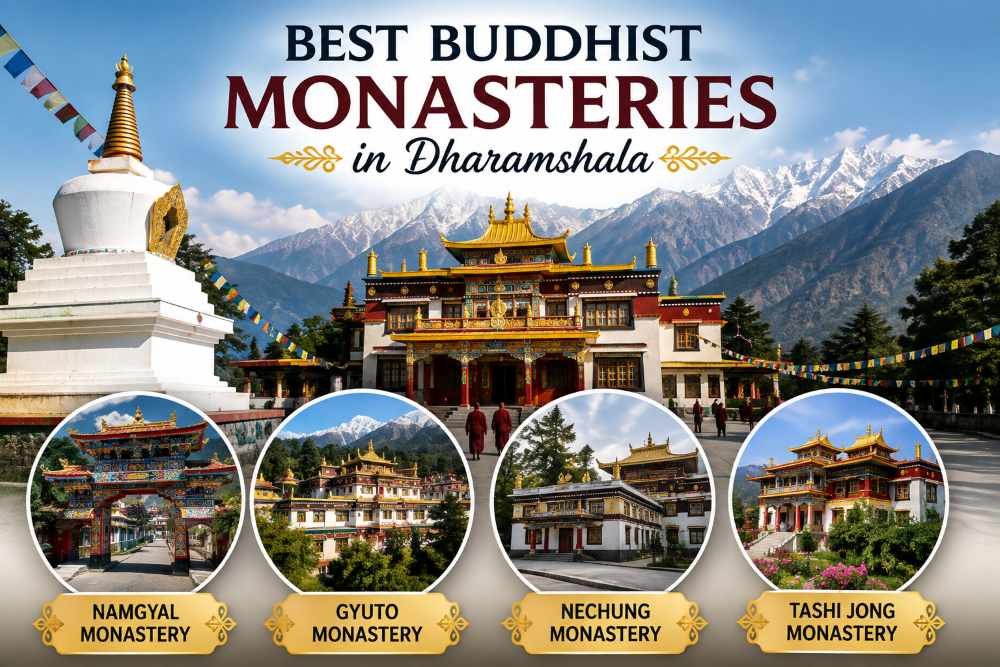
Best Buddhist Monasteries in Dharamshala – Complete Travel Guide
Nestled in the foothills of the Dhauladhar Range, Dharamshala is widely known as the spiritual capital of Tibetan Buddhism in India. After His Holiness the Dalai Lama made Dharamshala his residence, the town became home to some of the country’s most important Buddhist monasteries.
These monasteries are not only places of worship but also centers of meditation, Tibetan culture, learning, and peace. Visitors from around the world come here to experience spiritual tranquility, admire traditional Tibetan architecture, and learn about Buddhist philosophy.
If you’re planning a trip to Himachal Pradesh, here are the best Buddhist monasteries in Dharamshala that you shouldn’t miss.
1. Namgyal Monastery
Namgyal Monastery is the most famous Buddhist monastery in Dharamshala and serves as the personal monastery of His Holiness the Dalai Lama.
Located inside the Tsuglagkhang Complex in McLeod Ganj, it is a peaceful place where monks perform prayers, meditation, and religious ceremonies.
Highlights
- Residence monastery of the Dalai Lama
- Beautiful prayer halls
- Buddhist teachings
- Prayer wheels
- Peaceful meditation atmosphere
Location: McLeod Ganj
2. Tsuglagkhang Complex (Dalai Lama Temple)
The Tsuglagkhang Complex is the spiritual heart of Dharamshala and one of the most visited Buddhist sites in India.
The complex includes:
- Dalai Lama Temple
- Namgyal Monastery
- Prayer Wheels
- Meditation Hall
- Tibetan Museum
- Library
Visitors can observe prayer ceremonies and enjoy the peaceful surroundings.
3. Gyuto Monastery
Located around 8 km from Dharamshala, Gyuto Monastery is famous for preserving the ancient tantric traditions of Tibetan Buddhism.
The monastery features colorful murals, magnificent statues, and stunning Himalayan views.
Highlights
- Traditional Tibetan architecture
- Meditation sessions
- Beautiful gardens
- Mountain backdrop
4. Nechung Monastery
Nechung Monastery is one of the most historically significant monasteries in Tibetan Buddhism.
It is known as the traditional seat of the State Oracle of Tibet and holds deep spiritual importance.
Visitors appreciate its quiet environment and impressive Tibetan artwork.
5. Norbulingka Institute
Although primarily a cultural institute, the Norbulingka Institute also houses beautiful temples and meditation spaces dedicated to preserving Tibetan Buddhist traditions.
Highlights
- Traditional Tibetan art
- Beautiful gardens
- Prayer halls
- Cultural workshops
- Peaceful environment
6. Tashi Jong Monastery
Located about 15 km from Dharamshala, Tashi Jong Monastery is a peaceful retreat surrounded by forests and mountains.
The monastery is known for:
- Meditation
- Tibetan art
- Handcrafted souvenirs
- Buddhist teachings
7. Dip Tse Chok Ling Monastery
This lesser-known monastery offers a calm atmosphere away from the tourist crowds.
It is ideal for visitors seeking meditation, quiet reflection, and an authentic Buddhist experience.
Why Visit Buddhist Monasteries in Dharamshala?
These monasteries offer much more than religious significance.
Visitors can:
- Experience Tibetan culture
- Learn Buddhist philosophy
- Watch monks performing rituals
- Spin prayer wheels
- Enjoy peaceful meditation
- Capture beautiful photographs
- Admire Himalayan architecture
Best Time to Visit
The monasteries can be visited throughout the year.
March to June
- Pleasant weather
- Clear mountain views
- Best for sightseeing
July to September
- Green landscapes
- Fewer tourists
- Peaceful surroundings
October to November
- Cool weather
- Excellent photography
- Clear skies
December to February
- Cold weather
- Snow-covered mountain views
- Quiet atmosphere
Entry Fee
Most Buddhist monasteries in Dharamshala offer free entry.
Donations are welcome to support monastery maintenance and community activities.
Timings
Most monasteries are open between:
6:00 AM – 6:00 PM
Prayer ceremonies usually take place in the morning and evening.
Monastery Etiquette
When visiting Buddhist monasteries:
- Dress modestly.
- Remove shoes where required.
- Speak softly.
- Avoid disturbing meditation sessions.
- Ask permission before photographing monks.
- Respect prayer rituals and sacred objects.
Leave a Reply